
Draw to Dig - EPO Eats All
GOOD TO SEE YOUStrategy
4.448.00 Reviews
- Version
- 0.2.3
- Installs
- 1.00M
- Age Rating
- Everyone 10+
Screenshots
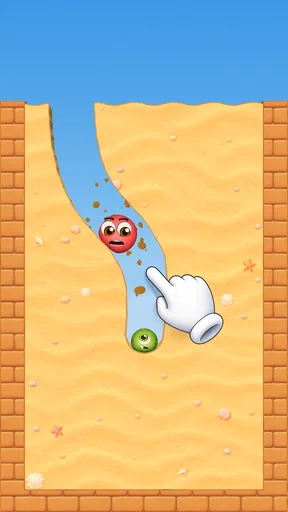
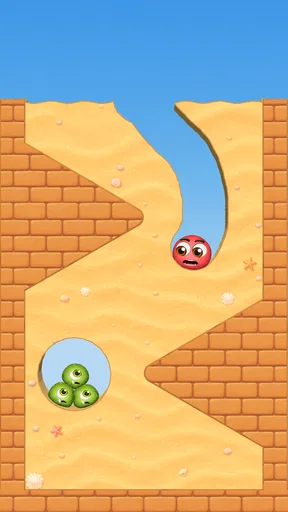
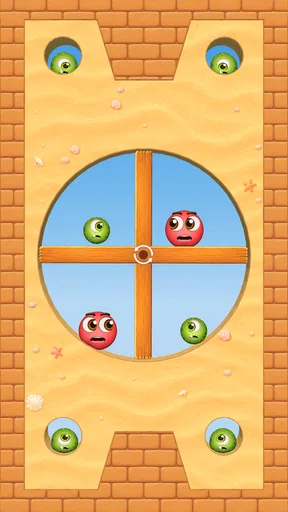
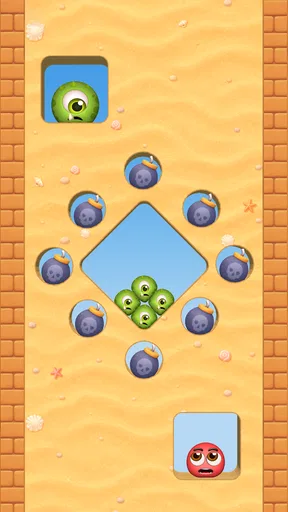
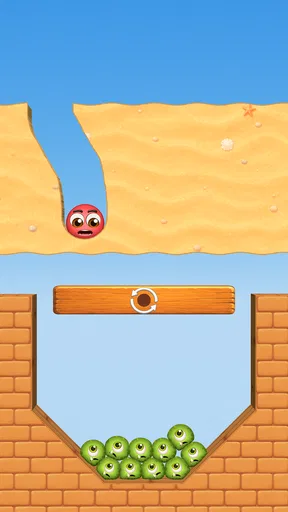
Our Review of Draw to Dig - EPO Eats All
 Analysis by Appyee
I found Draw to Dig - EPO Eats All most interesting as a quick shared-device game rather than a deep strategy title. The basic idea is easy to understand: I draw a route, the sand is removed along that route, and the hungry EPO needs the resulting path to reach bacteria and germs. That simple interaction makes it approachable when someone wants to hand a phone or tablet to another person for a short turn.
What gives the game its character is the small gap between drawing something that looks correct and drawing a route that actually works. A child may see the target immediately, while an adult may start thinking about the safest or shortest line. In practice, that makes each level a tiny planning exercise. It is not a complex battlefield strategy game, but it does ask for observation, timing of decisions, and a willingness to try a different route when the first drawing is unhelpful.
I reviewed it as a free strategy game from GOOD TO SEE YOU, currently listed as version 0.1.2. It is available for devices running Android 6.0 or later, carries an Everyone 10+ content rating, and has passed the early discovery stage with over one hundred thousand installs. Its average score is 3.9 from around one hundred sixty ratings, so the public response looks reasonably positive while still suggesting that expectations should remain realistic.
How the draw-and-dig idea works in everyday play
The appeal is immediate because the control is familiar: use a finger to draw. Instead of steering EPO directly through a conventional maze, I shape the route by deciding where the sand should be dug away. That change matters. The challenge is less about fast reactions and more about reading the space before committing to a line.
For a quick household session, this makes the game easy to explain. I can show another player the target, describe the goal in one sentence, and let them experiment. There is no need for a long tutorial conversation before the first attempt. The player can focus on the visible relationship between the drawing, the cleared sand, EPO, and the unwanted organisms.
The best moments come when a route looks obvious but needs a little more thought. A direct line may not be the most useful one, while a curved or carefully positioned path can make the difference. I would not describe the experience as a full puzzle campaign in the same class as a large, elaborate logic game. Its strength is the compact decision: look, draw, observe the result, and adjust.
That compact loop also explains where the game can feel limited. Players who want extensive character development, a large collection of tools, or a long-term strategic economy will probably find the concept too narrow. The game is built around the pleasure of solving the next sand route, not around building a large system over many sessions.
A realistic shared-device session
Imagine two people waiting at home while one phone is charging elsewhere. One person opens the game, studies a level, and draws the first path. The second person can immediately suggest moving the line higher, leaving more room, or trying a completely different direction. After the attempt, the device can be passed back without either player needing a separate profile or a long explanation.
I like this use because the game naturally creates conversation. The person holding the device makes the final drawing, but another person can act as the observer who notices a better route. That is especially useful with mixed ages: a younger player can handle the drawing while an older player helps them think through the space, without turning the session into a lecture.
There is also a practical downside to shared play. Since the core action is performed by drawing on the screen, each player needs enough room to use the device comfortably. A small phone can work, but passing it around repeatedly may be less convenient than playing on a larger screen. I would treat it as a take-turns activity rather than a simultaneous multiplayer game.
What to decide before handing over the device
Because the game is free to install and play, it is easy to place on a shared Android device. The financial boundary still deserves attention: in-app purchases are listed at $4.99 per item. I would make the purchase rule clear before letting a child use the device, especially if the phone or tablet is connected to a payment method. The game itself may be simple, but a shared device still needs sensible household habits.
My preferred setup is straightforward. I would install it on the device that is actually used for casual play, check that the operating system meets the Android 6.0 minimum, and decide who is allowed to handle purchases. I would also keep the session short at first, not because the game requires a strict schedule, but because a short trial quickly reveals whether the drawing controls suit the player.
There is no reason to treat installation as a commitment to a long campaign. The free entry point makes it practical to test the game with one household member, then remove it if the interaction does not feel comfortable. That is a better approach than assuming that a simple store description automatically means the game will suit every age or every screen size.
Account boundaries matter more than the game itself
For a family or shared tablet, I would separate the question of gameplay from the question of ownership. The person who owns the device should remain responsible for downloads, updates, and any purchase decisions. A child can play a level without needing access to the account used for billing or other device services.
I would not assume that a game designed for quick drawing provides household account management. If several people use the same device, the safest routine is to agree that purchases are handled by an adult and that nobody changes account settings during play. This is not a criticism of the game; it is simply the sensible boundary for any free title with paid items.
The current version, 0.1.2, also makes me view the game as an experience that may still be developing. I would keep the app updated through the normal device process, but I would avoid promising a child that every future session will feel identical. Early versions can change in pacing, presentation, or balance, and a shared-device routine is easier when expectations stay flexible.
Coordinating turns without making the puzzle frustrating
The most useful household rule is to separate planning from drawing. Before touching the screen, let the observer explain the intended route. Then the player holding the device can decide whether to follow that suggestion. This gives both people a role and prevents the session from becoming a struggle over who gets to control the screen.
I also recommend allowing failed attempts to be useful. If the first line does not guide EPO toward the bacteria and germs, ask what the drawing changed and why the result was different from the plan. That turns a miss into a short reasoning exercise. It is more productive than immediately taking the device away and drawing the “correct” route for someone else.
For younger players, I would keep advice limited to one change at a time. Saying “try moving the beginning of the line” is easier to act on than giving a long explanation about the entire level. The game’s small interaction works best when the conversation stays as simple as the drawing itself.
For older players, the same format can become a friendly challenge. One person can propose a route, another can look for a cleaner alternative, and the group can compare the results. I would still avoid presenting it as a contest if one player is much less experienced. The game is better at encouraging shared problem-solving than at proving who is the fastest.
Age context and trust
The Everyone 10+ rating gives me a useful starting point, but a rating is not a substitute for knowing the player. The premise uses bacteria and germs as targets, which may be funny to some children and unpleasant to others. I would show the game briefly before recommending it to a younger player who is sensitive to anything involving contamination or creatures being eaten.
The control scheme is likely to be more important than the theme for many families. A player who enjoys drawing and experimenting may settle in quickly. Someone who prefers precise buttons, predictable movement, or a more traditional board-style strategy game may find the digging interaction less satisfying. I would judge suitability by watching the first few attempts rather than by age alone.
Trust also means being clear about what the game is for. I would describe it as a small route-planning game, not as an educational science tool. The bacteria and germs give the objective a visual identity, but I would not use the app to teach health facts or biology. Its value is in the drawing puzzle and the conversation around solving it.
For a child using a shared device, I would make the play boundary explicit: which account is active, who may approve purchases, and whether the device can be passed to another person afterward. These simple rules reduce confusion without pretending that the game itself manages family roles. In my experience, clear expectations make casual games much easier to enjoy.
Where it fits among strategy alternatives
Compared with a traditional turn-based strategy game, this title asks for much less preparation. There are no armies, resource chains, or long-term plans to maintain in the basic concept. That makes it a better choice when I want a quick mental break or a game that can be explained while sitting beside someone else.
Compared with a conventional maze game, the distinction is the player-created route. I am not simply choosing from fixed corridors; I am drawing the path that changes how the sand is cleared. That gives the game a more tactile feel and makes each attempt look like a personal solution, even though the objective remains focused.
Compared with a physics puzzle, it appears less centered on elaborate machines or a large set of objects. The interest comes from the line and its consequences. Players who enjoy clean, readable puzzles may appreciate that focus, while those who want surprising chains of moving parts may prefer another option.
It is also not the right replacement for a cooperative game with separate turns, chat, or shared progress. The household use I found most convincing is informal coordination around one screen. If your priority is online competition, deep customization, or a substantial narrative, I would look elsewhere in the strategy category.
Small decisions that improve the experience
First, I would encourage players to pause before drawing. The temptation is to make a quick line because the control feels effortless, but a few seconds of observation can reveal whether the route leaves EPO enough room to reach the target. This is the simplest way to get more strategy from the game without adding rules that are not part of it.
Second, I would use the first attempt as an information-gathering step. Instead of judging a failed route immediately, notice which portion of the drawing helped and which portion made the path awkward. That mindset is particularly useful when playing with a child because it rewards curiosity rather than perfection.
Third, I would alternate who plans and who draws. The planner has to communicate clearly, while the drawer has to interpret the suggestion and make a precise gesture. This gives the game more social depth than playing alone and avoids letting the most confident person dominate every level.
Fourth, I would avoid making paid items part of the household reward system. Since each in-app purchase is listed at $4.99, a purchase should be an adult decision rather than an automatic prize for finishing a difficult route. The game is easier to evaluate fairly when the family first decides whether the free experience is enjoyable on its own.
Who should play, and who should skip it
I would recommend it to someone who likes short, visual puzzles and wants a game that can be shared casually. It suits a player who enjoys drawing a solution, seeing the result, and refining the next attempt. It is also a reasonable choice for a household that wants a low-pressure activity where one person can play while another offers suggestions.
I would be more cautious if the player needs a large amount of content, a strong sense of progression, or a detailed strategy layer. The current early version and focused mechanic make it feel like a compact experiment rather than a complete substitute for a major strategy game. That is not necessarily a weakness, but it should shape the purchase and download decision.
I would also skip it for a shared device where nobody is willing to set clear purchase boundaries. Free installation is convenient, yet paid items still make account responsibility important. Likewise, if the screen is too small for comfortable drawing or the player dislikes trial and error, the central mechanic may become irritating instead of relaxing.
My household verdict
After spending time with the draw-to-dig concept, I see Draw to Dig - EPO Eats All as a modest but distinctive strategy game for short sessions. Its strongest quality is the way one simple gesture creates a problem that can be solved alone or discussed with someone beside you. That makes it more suitable for shared casual play than its minimal premise might suggest.
I would install it for a household that enjoys passing one device around, provided everyone understands the account and purchase boundaries. I would start with a few levels, watch how the player responds to the drawing, and decide from there whether the interaction has enough variety to remain interesting. The free price makes that trial easy, while the 3.9 average from around one hundred sixty ratings suggests a generally acceptable reception rather than a universal recommendation.
My final opinion is positive but measured. GOOD TO SEE YOU has built the game around a clear physical idea, and that clarity is valuable when the goal is a quick shared activity. At the same time, the focused design will not satisfy players looking for a broad strategy system or a deep solo campaign. For the right household, it is an easy-to-explain puzzle that encourages cooperation; for everyone else, it is worth treating as a brief free experiment rather than an essential download.
Privacy and Permissions
See what permissions an app requests and how it handles your data.
- Wi-Fi connection information
- view Wi-Fi connections
- Other
- view network connections, full network access, control vibration, prevent device from sleeping, Google Play license check
Verdict
Strengths of Draw to Dig - EPO Eats All
- Simple one-finger controls make it easy to start playing immediately.
- Short levels are convenient for quick gaming sessions.
- Increasing obstacles keep the basic drawing mechanic engaging.
- Collectibles add an extra goal beyond simply reaching the finish.
- Bright visuals and playful presentation suit casual players.
Limitations of Draw to Dig - EPO Eats All
- Some solutions can feel trial-and-error rather than skill-based.
- Later stages may become repetitive once the main mechanic is familiar.
- Precision drawing can be frustrating on smaller phone screens.
- Ads may interrupt the experience between levels.
- The game offers limited depth for players seeking long-term progression.
Similar Picks in This Category
View All
Clash of Clans
Supercell4.5

Plants vs. Zombies™
ELECTRONIC ARTS3.7

Lords Mobile: Kingdom Wars
IGG.COM4.5

Clash Royale
Supercell4.4

State.io — Conquer the World
CASUAL AZUR GAMES4.1

Car Driving School : Car Games
Spark Game Studios3.9
Frequently Asked Questions
What is Draw to Dig - EPO Eats All, and how is it played?
Draw to Dig - EPO Eats All is a casual puzzle game built around drawing paths and solving simple physics-based challenges. Your goal is to guide EPO toward food, treasure, or other objectives while avoiding obstacles and hazards. Each level encourages experimentation, so you can usually try different lines, shapes, and strategies instead of following only one fixed solution.
Is Draw to Dig - EPO Eats All suitable for children?
The game is generally easy to understand because its core mechanic relies on drawing and visual problem-solving rather than complicated controls. Younger players may enjoy the colorful presentation and short levels, although some stages can require patience and logical thinking. Parents should still check the app’s age rating, advertising, and in-app purchase information before allowing children to play independently.
Does the game require an internet connection?
Many casual drawing puzzle games can be played offline after installation, which makes them convenient for travel or situations without reliable mobile data. However, features such as advertisements, updates, analytics, cloud functions, or promotional content may require an internet connection. It is best to test the game in airplane mode, since offline availability can vary between versions and devices.
Are there advertisements or in-app purchases in Draw to Dig - EPO Eats All?
The game may include advertising or optional purchases, as these are common ways for free mobile puzzle games to support development. Ads can appear between levels or after failed attempts, while purchases may be offered for removing advertisements, obtaining hints, or unlocking other conveniences. Review the store listing and payment settings carefully before downloading, especially on a shared family device.
What should I do if a level seems impossible or the game does not work correctly?
If a puzzle appears impossible, try drawing a simpler path, changing the order in which obstacles are handled, or using the environment to redirect movement rather than forcing a direct route. Restarting the level can also remove an unsuccessful drawing. If the app freezes, crashes, or fails to load, update it, restart your device, check available storage, and contact the developer through the official store page.
Play our best games!


